For embroidery digitizers

Vectors that digitize cleanly.

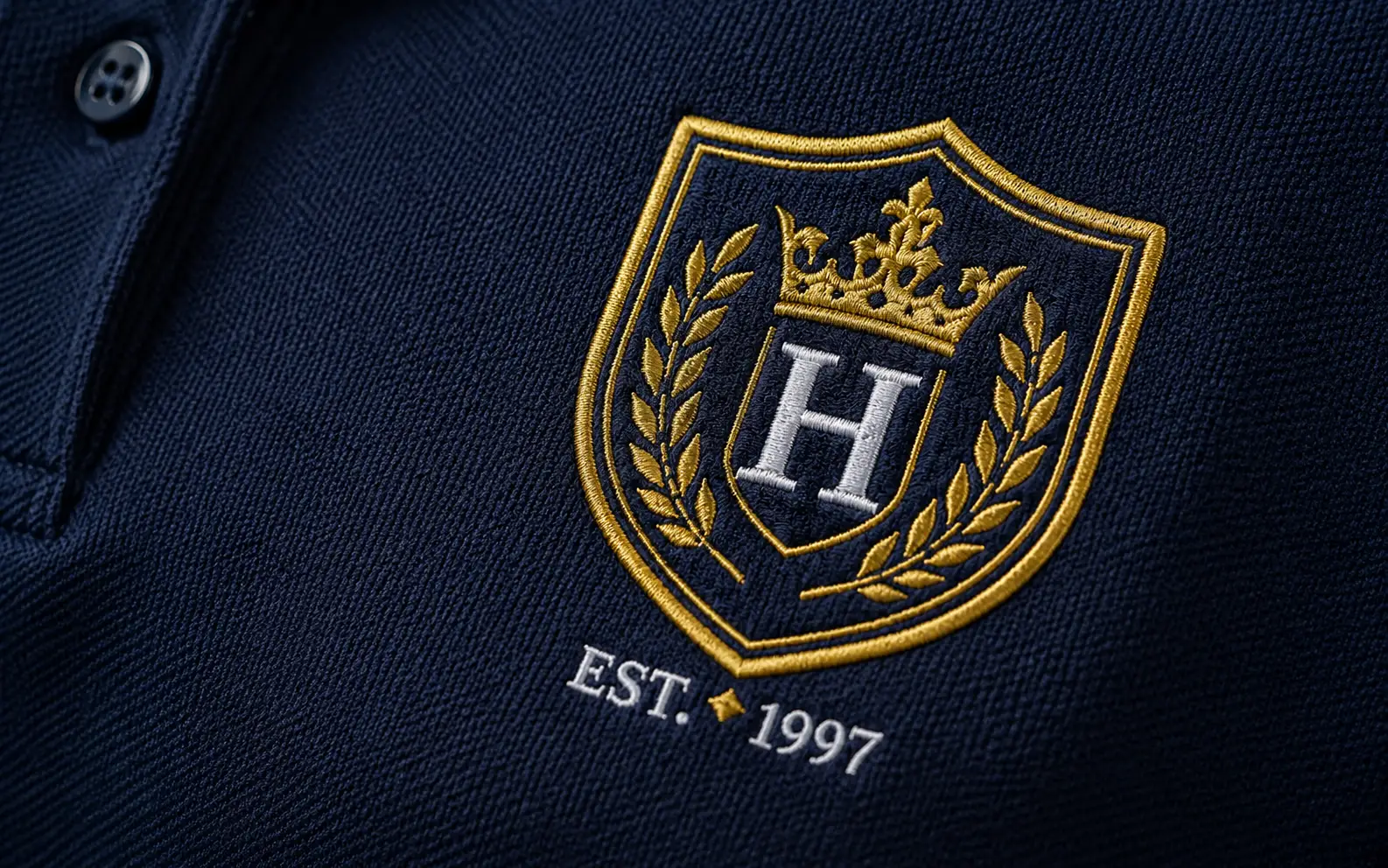
We rebuild raster artwork as embroidery-prep vectors — simplified for stitch density, closed for fill regions, sized correctly for the finished mark. Drop into Wilcom, Hatch, Pulse, Embird, and your digitizer keeps moving instead of fixing the source.

Vector conversion for embroidery digitizers

Embroidery digitizers use VectorWiz to prep raster customer artwork into clean, simplified vector files before digitizing. We close all paths, simplify detail that won't read at the finished stitch size, separate elements into stitchable layers, and outline type. The result drops into Wilcom, Hatch, Pulse, or Embird and the digitizer skips the source-cleanup step.

Why production shops standardize on VectorWiz

Closed paths only

Every fill region is a single closed path. No open shapes to manually close in your digitizing software.

Simplified for stitch size

Detail that won't read at 3-inch left-chest is removed during the rebuild, with notes about what was simplified and why.

Element-separated layers

Each color and each stitchable region on its own layer with named ink/thread color. No untangling overlapping shapes.

Type sized for stitching

Fonts outlined at the size they'll embroider at, with letter-spacing adjusted for satin-stitch readability where needed.

Wilcom / Hatch / Pulse compatible

Files import cleanly into Wilcom EmbroideryStudio, Hatch, Pulse Ambassador, Embird Studio, and BERNINA digitizing software.

Same-day on standard prep

Simple and Medium files come back within 8 business hours of checkout. Heavy reconstruction grades to High and ships within 24 hours.

How a job moves through VectorWiz

  1. Submit art and stitch spec

    Upload the customer file. Tell us the finished embroidery size (left-chest, full-back, hat front), thread colors (Madeira, Isacord, custom), and the digitizing software you use.

  2. Instant price

    Our classifier grades complexity the moment you upload and shows the price instantly — in credits for subscribers or USD for per-job orders. Note: we deliver vector prep, not the actual stitch file (.dst, .pes, .emb) — those are produced in your digitizing software from our prep.

  3. Manual rebuild + simplification

    Designer rebuilds vector by hand, simplifying detail that won't read at finished size, closing all paths, separating into stitch-friendly elements. QC against your finished size before delivery.

  4. Digitizer-ready delivery

    AI, EPS, SVG, PDF in one zip. Layered with named thread colors. Notes on what was simplified and why.

What every embroidery-prep deliverable contains

We don't produce the stitch file. We produce the clean vector source that your digitizer pulls in to produce the stitch file. That's the difference between a 30-minute digitizing job and a 2-hour digitizing job.

Standard embroidery-prep deliverable
FormatBest forWhat we ship
AI (Adobe Illustrator)Editing source for digitizersLayered with named thread colors, fonts outlined, all paths closed.
EPSOlder digitizing importsFlattened-color EPS, closed paths, no embedded raster.
SVGWilcom and modern importWeb-clean SVG with named groups for direct Wilcom import.
PDFCustomer proofPress-ready PDF for sign-off; preserves vector quality without exposing layered file.

What we simplify and why

Detail that doesn't read at the finished stitch size is noise. We simplify during the rebuild and write notes explaining each simplification — so you can show the customer the trade-off before the digitizer touches it.

  • Hairline strokes thinner than 1.5mm at finished size become solid fills or are removed.
  • Gradients become 2–3 step blends in available thread colors.
  • Photographic effects become high-contrast vector versions; we flag if the customer's expectation won't translate.
  • Type smaller than 5mm tall at finished size gets readability adjustments — letter-spacing, weight bumps, simplification of small letterforms.
  • Decorative outlines around small elements are removed if the outline would obscure the underlying shape at finished size.

Thread color naming and matching

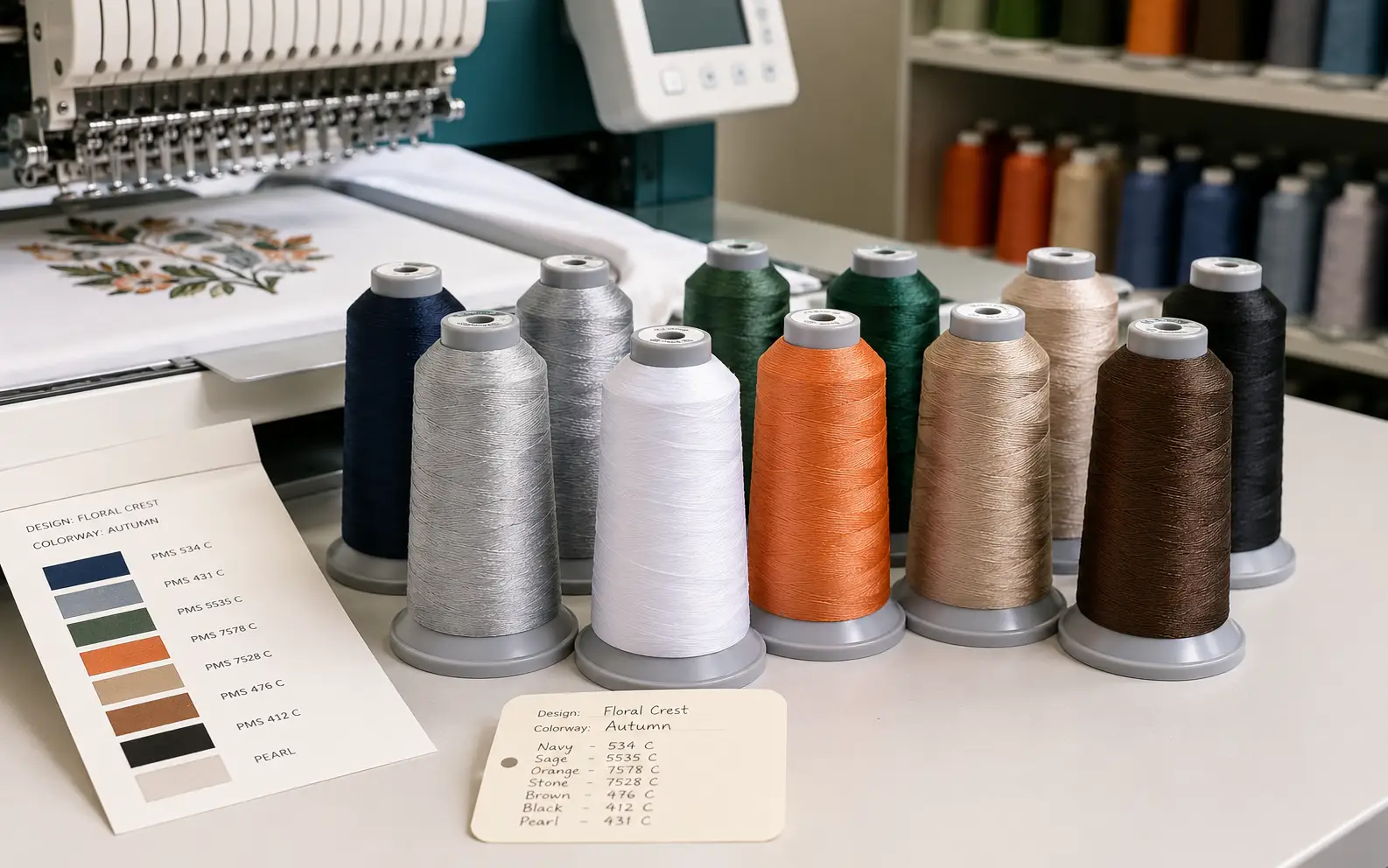
Pass us the thread brand and color codes you stock. We name layers with those codes so your digitizer doesn't have to remap. Common libraries we work with: Madeira Polyneon, Isacord, Robison-Anton Super Strength, Sulky, Coats & Clark, Mettler.

Madeira Polyneon / Classic Rayon
Most common in commercial embroidery. We name layers with the 4-digit Polyneon code or Classic Rayon equivalent.
Isacord
Standard for industrial polyester. 4-digit codes preserved as named spot colors in the AI file.
Custom thread mix names
If your shop uses house naming (e.g. ‘House Navy’, ‘Sport Red’), pass us the names and we save them as named spot colors.
Pantone equivalence
If your customer specified a Pantone, we'll suggest the closest thread match in your stocked library during the rebuild.

How complexity drives the embroidery-prep price

Embroidery-prep complexity in practice
AspectCreditsUSDTypical example
Simple10$25–351–2 thread colors, clean source, large finished size
Medium20$45–653–5 thread colors, moderate detail, standard left-chest size
High35$75–110Detailed mascot art, 6+ threads, hat-front or sleeve sizing
Complex60$130–180Photo-derived portrait, fine illustration, 8+ threads
BulkEmail usEmail usOnboarding pack: main mark + size variations + alt-color versions — email hello@vectorwiz.com for bespoke pricing

What to include with your order

  1. Source artwork (any raster format works)
  2. Finished embroidery size: left-chest (3.5″), full-back (10″), hat front (2.25″), or custom
  3. Thread library and color codes (Madeira Polyneon, Isacord, custom mix names)
  4. Substrate: garment type, fabric (cotton, polyester, performance blend, twill cap)
  5. Digitizing software you use (Wilcom, Hatch, Pulse, Embird, BERNINA — drives some compatibility decisions)
  6. Deadline and rush flag

Frequently asked questions

Direct answers to what production buyers ask before placing their first order. Question missing? Ask us.

Do you produce stitch files (.dst, .pes, .emb)?
No. We produce the clean vector source that your digitizing software pulls in. The stitch file is produced in your software with your digitizer's expertise on density, direction, and push/pull. We focus on making the vector as clean as possible so your digitizer's time isn't wasted on source cleanup.
Can you size art for hat fronts vs left-chest vs full-back?
Yes. Tell us the finished embroidery size on your order and we simplify accordingly — small detail removed for hat fronts, more detail preserved for full-back. Sizing affects what's readable; we work backward from the finished size.
Do you handle fine portrait or photographic embroidery?
Yes — graded as Complex. Photographic source becomes a high-contrast vector version with explicit thread-color separations. We flag if the customer's expectation (e.g. very fine grayscale gradient in 4 thread colors) won't translate before digitizing starts.
Can you simplify a busy logo for embroidery?
Yes — that's most of what we do. We document each simplification (which strokes thickened, which gradients became blends, which outlines removed) so you can review before sending to digitizing.
What thread libraries do you support?
Most common commercial libraries: Madeira Polyneon and Classic Rayon, Isacord, Robison-Anton Super Strength, Sulky, Coats & Clark, Mettler. We can also save custom house-mix names if your shop has them.
What if I use Wilcom Hatch BERNINA Embird — different software?
Our delivery is software-agnostic — AI, EPS, SVG, PDF all import cleanly into Wilcom EmbroideryStudio, Hatch by Wilcom, Pulse Ambassador, Embird Studio, BERNINA, and most other commercial digitizing tools. SVG is preferred for Wilcom's native import.
Do you outline type for embroidery?
Yes — fonts are converted to outlines before delivery. We also adjust letter-spacing for satin-stitch readability where the source font is too tight at the finished size.
How is this different from a digitizer doing source cleanup?
Digitizers charge their digitizing rate for source cleanup. We charge a vector-conversion rate, which is usually lower per-job, and the digitizer keeps moving on the actual digitizing. Most multi-file shops save 30–50% on per-job cost by routing source cleanup through us.
Can I get a stitch-out mockup?
Not from VectorWiz directly — our deliverable is the vector. But we can prep the file specifically so your digitizing software produces a clean stitch-out. Stitch-out is a digitizing-software output, not a vector-conversion output.
What's the cheapest way to run high-volume embroidery prep?
Pro at $799/mo (380 credits) handles roughly 19 medium embroidery-prep jobs/month with priority queue placement. For higher volume, a 500-credit top-up pack at $1,250 stacks on top of Pro. For bulk batches, email hello@vectorwiz.com for bespoke pricing.
Order now

Upload your file. Get an instant estimate. Order in minutes.

Drop an image, see the complexity-based price automatically, and check out — subscribers debit credits, everyone else pays per job.

Need something custom? Email hello@vectorwiz.com

Specialised for the way your shop runs

Production buyers don't need a generic vector — they need files that drop straight into the next step in the workflow.

Also in this topic

Reviewed by VectorWiz Production Team · last updated May 9, 2026