Bidding Sign Jobs With Bad Artwork: The Hidden Cost for Fabricators

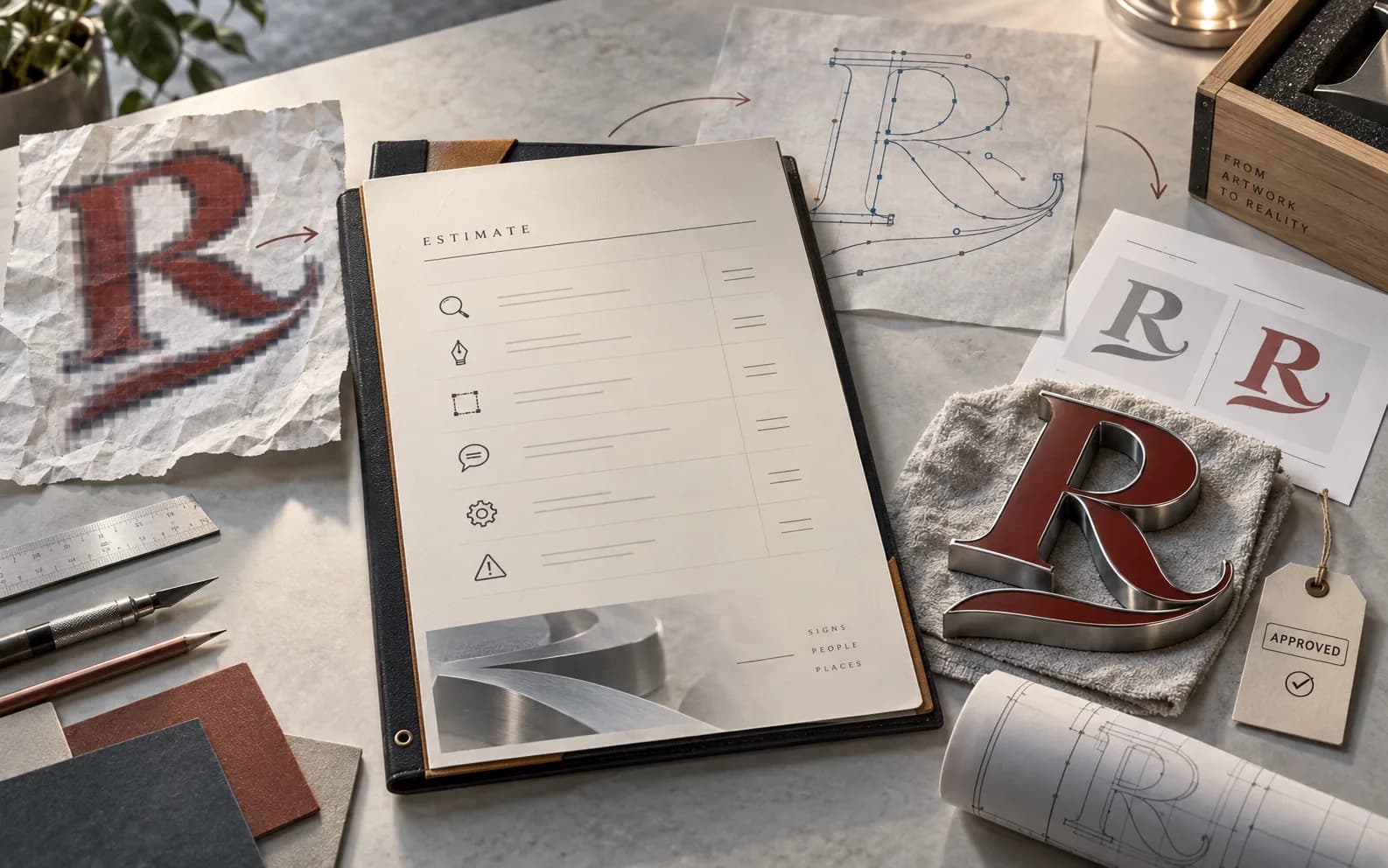
Three years ago a client emailed over their logo for a monument sign quote. It was a screenshot pulled off their own website, 72 pixels tall, jagged around every letter, the kind of file that looks fine on a phone screen and falls apart the moment someone tries to cut it into anything. The estimator quoted the job at the standard rate anyway, because the client was in a hurry. Two weeks into fabrication, the file hit the CNC operator's desk and it was clear the "logo" was never going to route clean, and the whole shop felt that sinking, too late feeling of a job going sideways over something nobody caught early enough.
That is exactly why bidding sign jobs with bad artwork the same way you'd price a job with clean source art is a mistake. It means fixing that art on unpaid time, and the cost lands on the shop, not the client. VectorWiz was built around exactly this gap. It rebuilds messy client art by hand before it reaches a shop floor, instead of letting a bad file slip into production disguised as a finished one.
Why Does Bad Client Art Cost More Than It Looks Like It Should
A screenshot, a faxed logo, a scan of a business card, or a JPEG pulled from an old PowerPoint deck. To a client, it is just a logo. To the person turning it into something a laser or router can cut, it is a different job than art that came in clean and ready to trace. Every jagged edge gets smoothed by hand. Every color that is blurred during compression gets separated again by eye. A font flattened into pixels has to be identified or rebuilt letter by letter.
On signage work specifically, colors also need matching to real standards like PMS Solid Coated, RAL, or the Oracal shade charts vinyl cutters actually stock, not just eyeballed from a faded screenshot. None of that shows up when a job is quoted at a glance, and that is exactly why the estimate and the real cost drift apart.
How Do You Tell If Client Art Is Actually Usable
A JPEG or PNG pulled off a website is usually raster artwork, and raster art rarely holds the clean paths a fabrication file needs, no matter how large it looks on screen. A client saying "I just have this from my old business cards" and sending a photo of the card means that is a photo of print, not print. A file that opens in Illustrator but turns out to be one flattened image sitting on a single layer, with no real vector paths underneath, is not actually a vector file, whatever the extension says.
Not every file is that clear cut. A vector file with a few stray anchor points but otherwise solid geometry is a light cleanup, not a redraw. A logo that is technically vector but was built in a font that no longer matches the brand's current usage is a type treatment question, not an artwork quality one. Either way, the fix is the same: open the file and check the actual paths and separations before assuming, rather than guessing from how it looks zoomed out.
Checking client art before a quote goes out, not after, is the honest move. A short art check before locking a price costs almost nothing and saves a shop from guessing wrong on a job that turns out to need a full redraw instead of a light cleanup.
What to Check Before Bidding
| Scenario | What Happens | Cost Impact |
|---|---|---|
| Bid locked without checking source art | Problem surfaces mid-production, often after the client already approved a price | Shop absorbs the redraw hours, schedule slips, margin shrinks |
| Bid locked after a short art audit | Tier and price reflect what the file actually needs | Client sees an accurate price up front, no surprise change order |
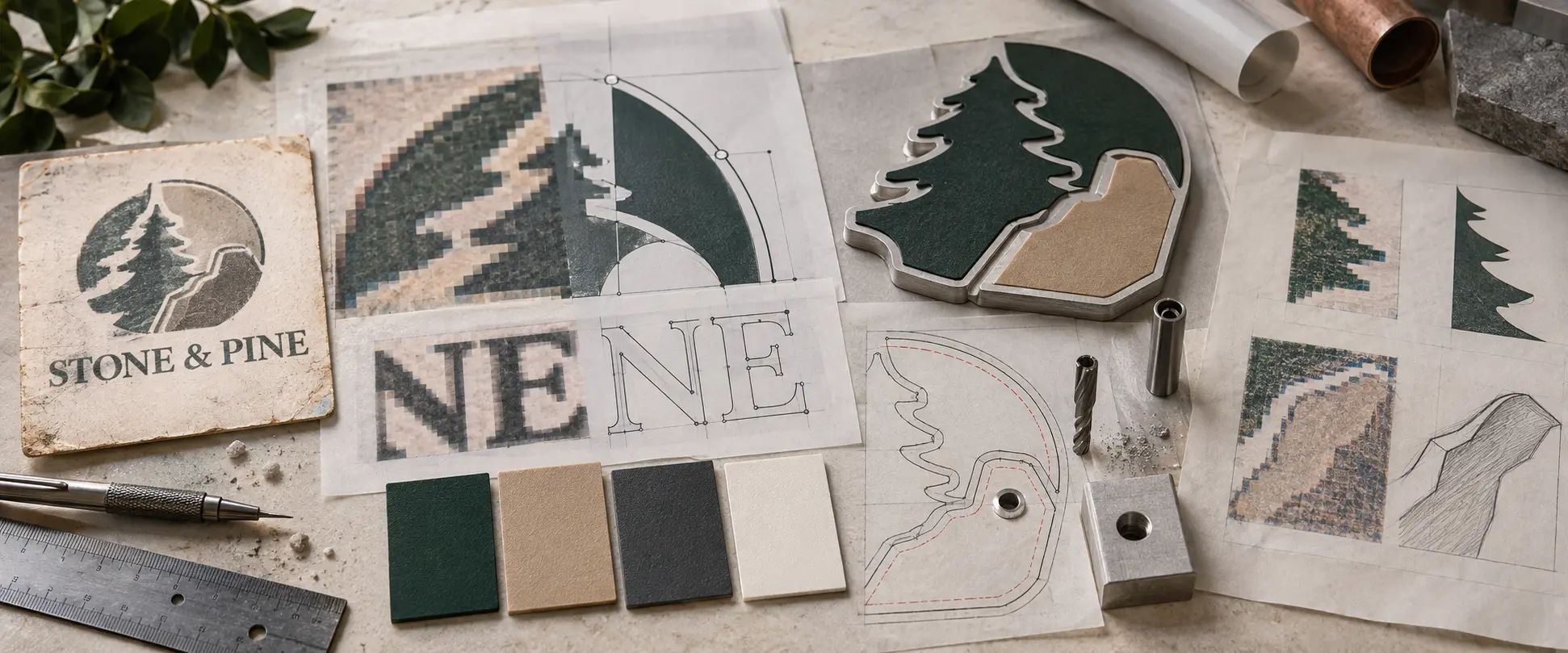
The second row is close to how vector conversion for signage fabricators works at VectorWiz. A designer looks at the real source, not just the thumbnail, and sets the tier on six things:
- How many colors are really in the art
- Whether the source is clean or damaged
- How complex the shapes are
- Whether the type is a standard font or custom lettering
- How specific the workflow is, meaning a plain conversion versus something like kerf-compensated DXF for a router
- Whether the job is a faithful redraw or a full re illustration from a rough reference
That tier is confirmed instantly when you upload of upload, before any billable work starts, which is the detail that actually protects a shop's own quote once it goes out the door.
If a price has already gone to a client before the art problem was caught, the fix is a short, factual follow-up rather than a silent scramble. Naming exactly what is missing, clean paths, separated colors, real type instead of flattened letters, and giving a revised number before redraw work starts, holds up better with clients than a quiet mid-production increase.
How Should Sign Shops Price Artwork Redraw Work?
Artwork preparation and fabrication are two different kinds of labor, and pricing them as one flat number is where most shops lose money on messy files. A format swap might take five minutes. A full redraw can mean rebuilding paths by hand, recreating custom lettering, separating colors that blurred together, and prepping the file for a specific machine.
A workable pricing approach weighs the same handful of things every time: how many colors are actually in the art, how complex the shapes and curves are, whether the lettering is standard or custom, how clean or damaged the source is, what output format the machine needs, and whether the job is a light cleanup or a full re illustration.
Separating "artwork ready to go" from "artwork that needs work" at the quoting stage, rather than discovering it mid-production, is what keeps a bid honest. It is also worth deciding upfront whether an in-house designer has a free block of hours for a light cleanup, or whether a full redraw needs to run in parallel with a dedicated outside resource so production is not the one waiting on it.
How Bad Artwork Creates Production Costs
The hidden cost of bad source files is not just extra design hours. It is the reprint or the rerun on physical material.
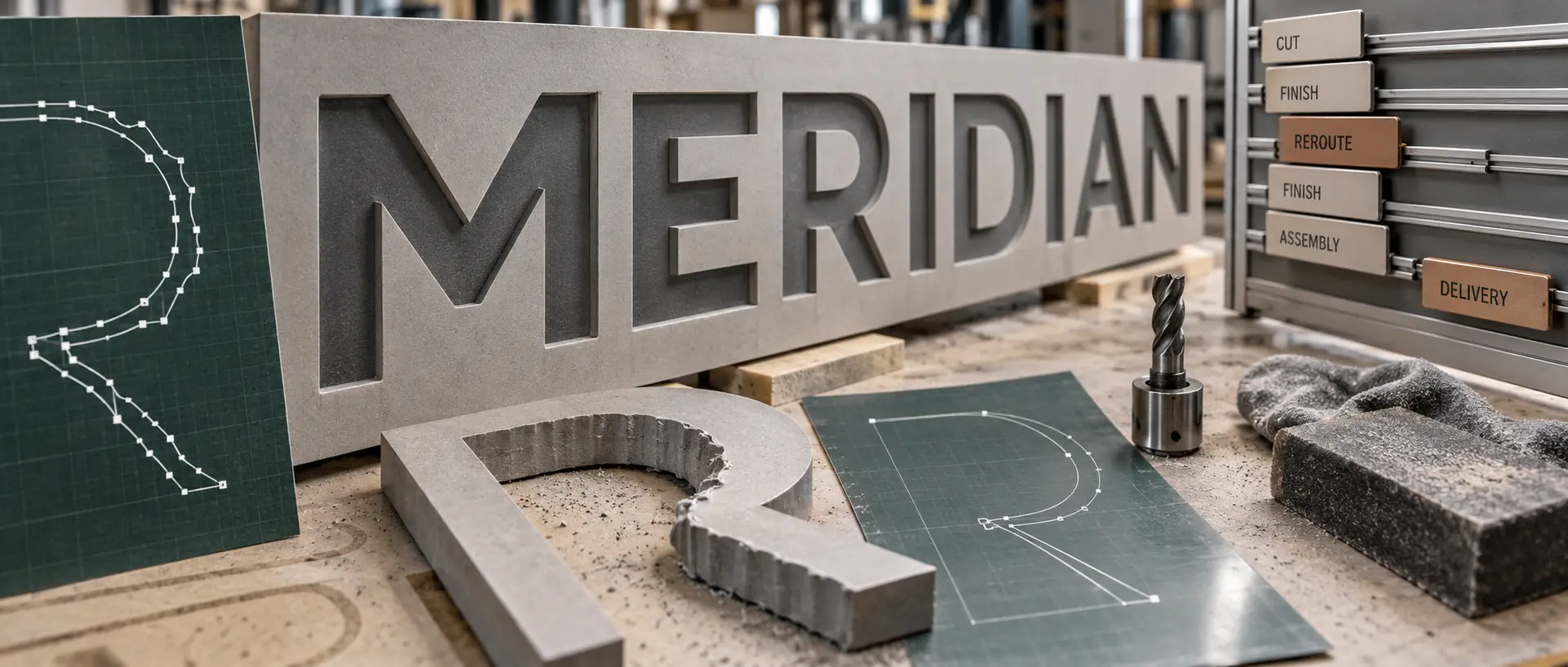
A CNC file cut from a poorly redrawn logo can leave visible stairstepping on a curve that should be smooth, meaning either living with it on a finished monument sign or scrapping the panel and rerouting it. A laser cut dimensional letter set traced from a blurry source can come out with rounded corners where the original type had sharp ones, and a client will notice that on an installed sign even when nobody else does. Vinyl cut from a signage graphic with stray anchor points can leave uneven edges on a storefront decal that look fine from ten feet away and wrong up close.
When a fabricator has to redo physical output because the file underneath was never production-ready, the cost can climb well past what it would have taken to fix the art correctly the first time, once material, machine time, and labor are all counted.
This is also why a bad file should shift the promised delivery date, not just the price. A quote built assuming clean art carries an implied timeline, and if redraw work has to happen first, that timeline needs to move too, or the schedule slips quietly and the client finds out the hard way.
Where VectorWiz Fits Into This Problem
VectorWiz is not the right call for every job. A client who hands over a clean, high-resolution vector file that just needs a format swap has no real redraw work to price, and a shop can usually handle that in-house in a few minutes.
VectorWiz earns its keep on the files that are not clean, the screenshots, the scans, the flattened PDFs, the art that looks fine until someone tries to actually cut it. A fabricator can upload the file and get a price confirmed instantly when you upload, choose standard, rush, or flex turnaround based on the deadline, and get back layered source plus press-ready files, typically AI, SVG, and PDF, with DXF or other platform specific formats on request at no extra charge. Revisions are included until the file is right, and if a delivered file is not production correct, VectorWiz remakes it, no store credit and no argument. VectorWiz holds every job to closed paths with clean nodes and layered, named files, and those two things alone help cut down many of the problems that only surface after the material is already cut.
Get the Bid Right Before It Leaves Your Desk
A quote built on a file nobody actually checked is a quote that can come back to bite the schedule and the margin later. Upload the client's art to VectorWiz before locking that next bid, and get a real tier and price confirmed instantly when you upload, not a guess. For a bulk order or something unusual, like a full sign package or a multi location rebrand, email hello@vectorwiz.com and a real person will work up a custom quote before anything gets promised to the client.
Frequently asked questions
How do I know if a client's logo file needs a full redraw?
If the file is a photo, screenshot, scan, or a flattened image with no real paths, it needs a redraw rather than a light cleanup. Check whether the shapes are actual vector paths or one solid image.
Should I charge the client extra for bad source art?
Yes. It helps to explain it as the actual work involved rather than a penalty. Clients who just want a usable file tend to accept that the source needs to be rebuilt by hand.
Can a laser or CNC shop use an auto traced file instead of a hand drawn one?
Technically yes, but auto traced files often carry stray anchor points and rough curves that show up as visible flaws once cut into material, especially on curved or detailed letterforms.
How long does it take to get a client's bad art turned into a usable vector file?
Standard turnaround runs about 24 hours. Rush jobs take 12 hours for a 50 percent surcharge. Flex turnaround runs 3 business days for a 10 percent discount.
What file formats will I get back for signage fabrication?
Layered source plus press-ready exports, usually AI, SVG, and PDF, with DXF, EPS, CDR, or other platform specific formats available on request at no added cost.
What if the redrawn file still is not right for our machine?
Revisions are included on every job until the file is right. If a delivered file is not production correct, it gets remade for free.
How much does it typically cost to fix unusable client art?
Pricing runs from $19 for simple single color cleanup up to $190 for full re illustration work. Most sign related jobs fall in the middle tiers depending on color count and detail.
Naimur Rahman
Leads design direction and quality at VectorWiz. Reviews and redraws production artwork by hand across sign, screen-print, embroidery, and CNC work.
Related articles
Drawn by hand. Built for production.
Instant pricing, no commitment. Production-correct vectors in your inbox in 24.