How Sign Shops Can Build a Better Vector File QC Process

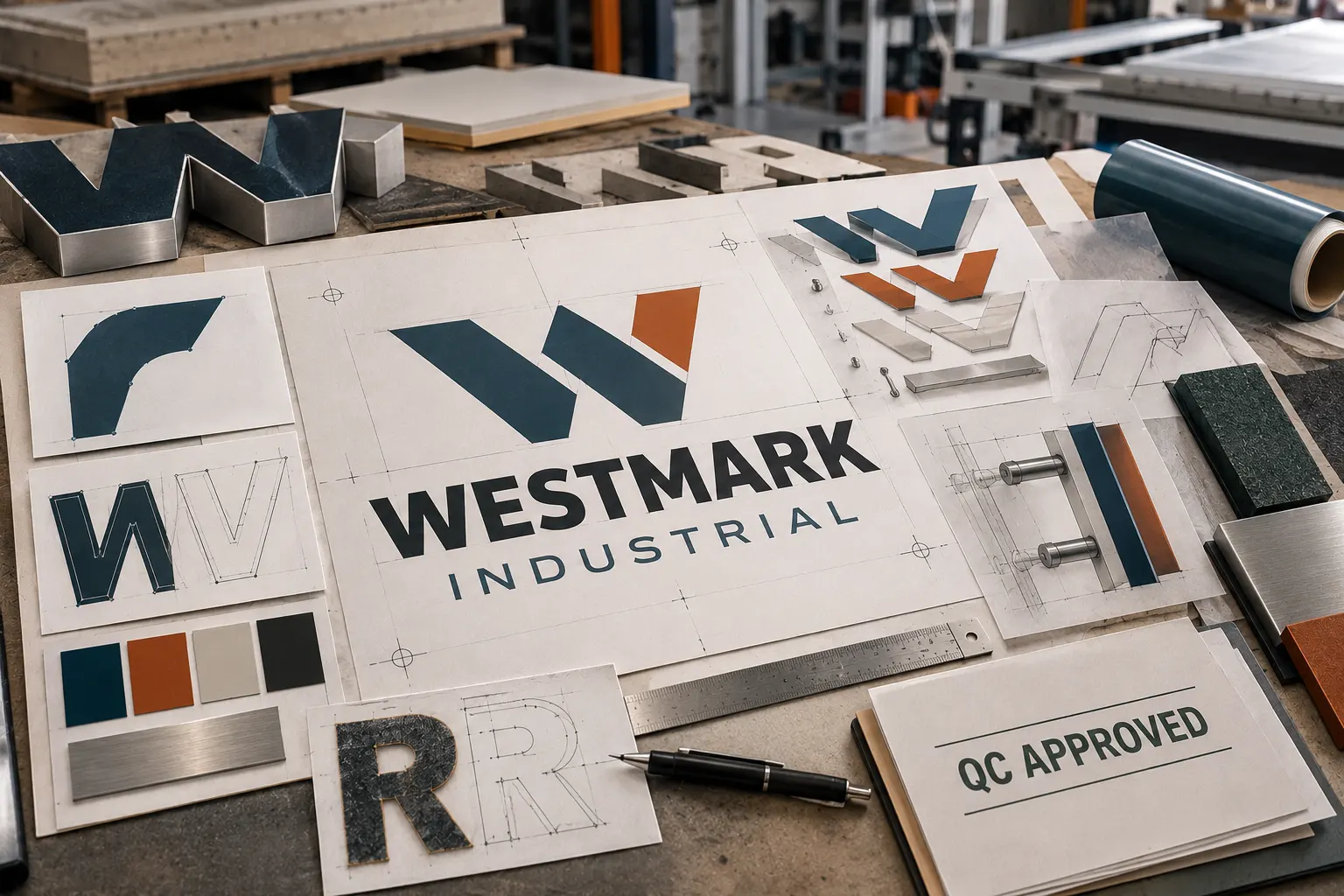
At one sign shop, a production manager kept a folder on his desktop labeled "Fix Before Router." By the time a job landed in that folder, it had already been quoted, scheduled, and half approved by the client, and the fix always seemed to land right as the router queue filled up. Nobody enjoys the call that pushes a client's install date back over a file problem that should have been caught days earlier, and that dread alone is usually reason enough to build a better process. A vector file QC process exists for exactly that reason. It catches the open path, the stray anchor point, or a color setup that does not match the production requirement before the file ever reaches a machine, not after. That habit, catching problems before delivery instead of after, is exactly what a sign shop's own quality check routine should copy.
Drawn by hand. Built for production.
Instant pricing, no commitment. Production-correct vectors in your inbox in 24.
Need something custom? Email hello@vectorwiz.com
What Does a Vector File QC Process Actually Mean
In plain terms, this kind of review is a short checklist someone runs through before a file goes anywhere near a plotter, router, or laser bed. It looks for the specific things that break production: unclosed paths, wrong units, missing bleed, colors never actually matched to a real standard, and layers not labeled the way the machine operator expects. Most shops skip this step because it feels like one more thing added onto an already tight schedule. In practice, skipping it is what causes the tight schedule in the first place, since a problem caught on the floor mid cut usually costs more time than the same problem caught on screen.
Why Does This Matter More for Sign Shops Specifically
Sign shops sit in a different spot than most print or cut businesses. A single file might get routed through a vinyl plotter, a CNC table, and a printer for a backlit panel, all from the same source art. If that source file has a problem, it does not fail once, it fails three times in three different departments, and each one assumes someone else already checked it. That assumption is usually where things fall apart.
A shared sign shop file review, even a short one, forces someone to actually own the check instead of everyone trusting it already happened upstream. That person does not need to be the most senior designer on staff. What matters is that one specific person is assigned to the check, rather than leaving it as a vague hope that whoever has a free minute will look at it.
What Should Be On the Checklist
The core of a vector proofing checklist usually comes down to six checks. These are similar across many sign shop workflows, even though the exact requirements vary by machine, material, and software, whether the file gets opened in Illustrator, CorelDraw, or a machine's own cutting software:
- Closed paths. An open path on a router file can send the cutting bit somewhere it should never go.
- Real color matching. Colors should match a standard like PMS Solid Coated or RAL, not just an RGB value with no swatch check.
- Layer naming. Layers should be named and separated the way the specific machine workflow expects, not just grouped loosely by color.
- Units and scale. A file drawn at the wrong scale often looks correct on screen and only reveals the problem once it is sitting on the table.
- Stray anchor points. Leftover points from editing can create tiny, unwanted notches that only show up mid cut.
- Production specific cutting requirements. Confirm any required kerf compensation, toolpath allowance, or other machine specific cutting setup has been applied correctly.
Before approving the file, also confirm the required output format. A structurally clean vector file can still create a delay if the machine or downstream software needs a different format than what was delivered, a DXF instead of a generic AI file, for example.
What Happens When a File Fails the Check
Catching a problem is only half the process, since what happens next depends on where the file came from. If it was drawn in house, the fix usually happens right there before the job moves any further. If it came from a client as their own logo or reference art, the better move is usually going back to them with the specific problem, an unclosed path or a color with no real PMS equivalent, rather than guessing at a fix and hoping it matches what they had in mind. Nobody enjoys that call, but naming the exact problem tends to land better than a vague delay with no explanation.
If the file came from an outside vendor instead, it should go back with the exact issue named, since guessing at a repair on someone else's work tends to introduce a second problem on top of the first. A vendor's revision policy matters here too. VectorWiz, for instance, includes two free revision rounds on every job so a shop can flag something during proofing rather than after production starts.
A Simple QC Workflow
The goal is not just to inspect files, it is to create a repeatable file acceptance process that determines whether a job is ready to move into production. Putting this into one sequence keeps it from becoming five separate habits scattered across different people:
- Intake. Confirm the file, the production method, the substrate, and the output format needed.
- Technical QC. Run the six core checks above.
- Production review. Check anything specific to the machine or job that the six checks would not catch alone.
- Decision. Approve the file, send it back for correction, or send it out for a full redraw.
- Final verification. Before production starts, confirm the version being sent to the machine is the one that was approved.
Only one of those five steps, technical QC, is what most shops mean when they say QC at all.
How Long Should This Review Actually Take
A review does not need to take long to be useful, it needs to happen every time, not just when there is time to spare. Shops that struggle with this step usually built a checklist that tries to catch everything, including rare edge cases, and the result is too long to actually follow once a deadline gets close. Attaching the checklist to the job ticket itself, rather than trusting someone to remember it, is usually what makes it stick. Turnaround speed does not change what gets checked, only how fast it needs to happen, and a rush job still needs the same checks run before the file reaches a machine.
Automatically Traced Files Versus Professionally Prepared Files During Review
| What You're Checking | Automatically Traced File | Professionally Prepared File |
|---|---|---|
| Path structure | May contain unnecessary nodes or paths that need cleanup | Typically structured with production requirements in mind |
| Color setup | May require additional verification | Can be prepared against the specified color standard |
| Layer organization | May need manual organization | Can be structured around the production workflow |
| Review time | May require more inspection | Often requires less cleanup |
| Rework risk | Depends on the quality of the final file and review | Depends on the quality of the final file and review |
The method used to create a file does not replace QC, the quality of the final production file is what matters. Hand drawn vector files from VectorWiz go through the studio's own six production standards before they ship, so a shop's own check becomes a quicker confirmation rather than a full audit.
How Should Review Depth Match Job Complexity
Review depth should match job complexity. Simple single color artwork with clean source art usually only needs the standard checklist run once, since there is little room for something to hide. Complex routed signs, multi layer files, or jobs involving multiple substrates deserve a more deliberate look, since the same six checks still apply but the file has more places for something small to slip through. Matching review effort to complexity keeps the process from turning into either a rubber stamp or a bottleneck.
An Honest Limitation Worth Naming
No checklist catches everything, and it should not be expected to. A short review will not replace a full engineering look at a complex multi substrate job, it catches the common, predictable failures, not the rare ones. There is a harder limitation too, a checklist only works if someone on staff actually understands vector files well enough to run it. It can feel uncomfortable admitting a shop does not have that skill in house, but pretending otherwise usually costs more than either training someone specifically or having the more complex files reviewed or rebuilt by someone with deeper production file expertise.
What To Do Next
Write the six checks above down somewhere the whole team can see them, then run them against the next file that comes through, whether it was drawn in house or delivered by an outside vendor. If a file keeps failing the same checks over and over, that may point to a sourcing, training, or workflow problem that the final QC pass alone cannot solve, and it is worth seeing what a file built for your exact workflow looks like from the start. Upload one to VectorWiz for an instant price, or email hello@vectorwiz.com for a batch of tricky jobs or a format question that does not fit neatly into an upload.
Frequently asked questions
What is the fastest way to check if a vector file has open paths?
Most vector programs have a built-in function to highlight open paths directly, usually under a document info or diagnostics menu, which quickly flags them before they cause problems during cutting.
How do I know if a color was actually matched or just converted?
Ask whoever delivered the file which color standard or reference was used, such as PMS, RAL, or a specified vinyl manufacturer color reference. If the answer is vague or the file only shows RGB values, it likely was not matched against a real swatch.
Which QC items are easy to overlook?
Scale, bleed, output format, and machine specific requirements are easy to overlook because the artwork can still look correct on screen even when one of these is wrong.
Is a full remake ever the right call instead of fixing a file in house?
Sometimes, especially when a file has more structural problems than it is worth patching one by one. VectorWiz backs every job with a full remake at no charge instead of store credit, because a partial fix is not always the faster option.
How much time does this kind of review realistically save a shop?
There is no single verified number for this since it depends on the job and the shop, but the logic holds regardless of the exact minutes: catching a problem before a file reaches the machine is almost always faster than remaking a piece after it has already been cut or printed.
Naimur Rahman
Leads design direction and quality at VectorWiz. Reviews and redraws production artwork by hand across sign, screen-print, embroidery, and CNC work.
Related articles
Drawn by hand. Built for production.
Instant pricing, no commitment. Production-correct vectors in your inbox in 24.