Weed-friendly cut paths for vinyl decals.
A weed-friendly vinyl decal file is built from clean closed vector paths with minimal nodes, no hair-thin slivers or tiny detached islands, and no overlapping or double-cut lines. Weeding is pulling the excess vinyl away by hand, so paths that avoid fragile pieces and stray cuts lift cleanly instead of tearing. Counters are cut too, and can be bridged to the surround when the job needs a one-piece or stencil application.

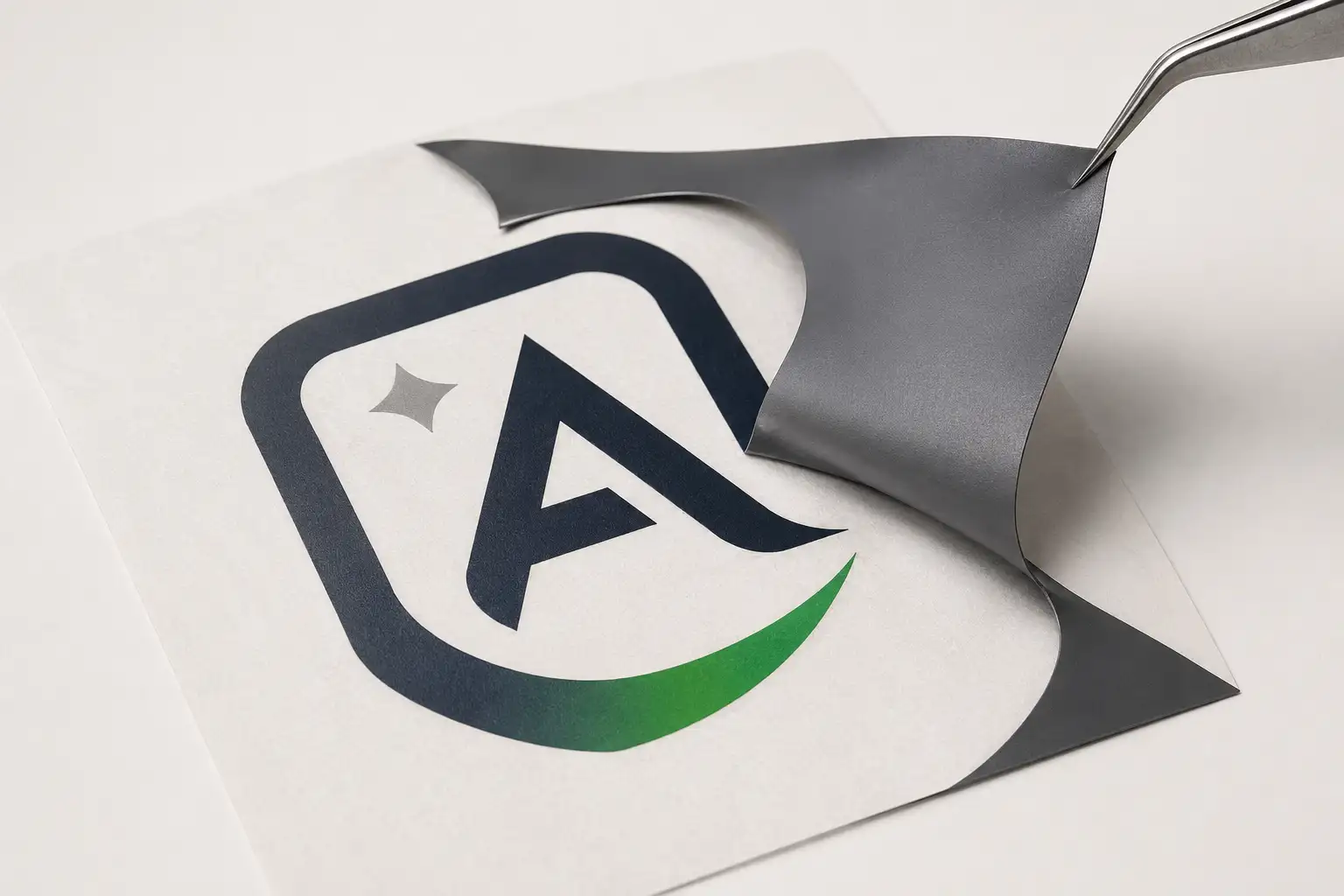
Weeding is the moment a decal file earns its keep. Pull the excess vinyl away and either it lifts in clean sheets or it fights you — tearing, leaving slivers, dropping tiny pieces. Whether it goes well is decided in the paths long before the blade moves. Here is what makes a decal weed clean.
Send the art. Get clean, weed-ready cut paths back.
Closed paths, minimal nodes, no double-cuts, counters bridged where you need them — cut-ready for your plotter in 24 hours.
Need something custom? Email hello@vectorwiz.com
Closed paths, minimal nodes
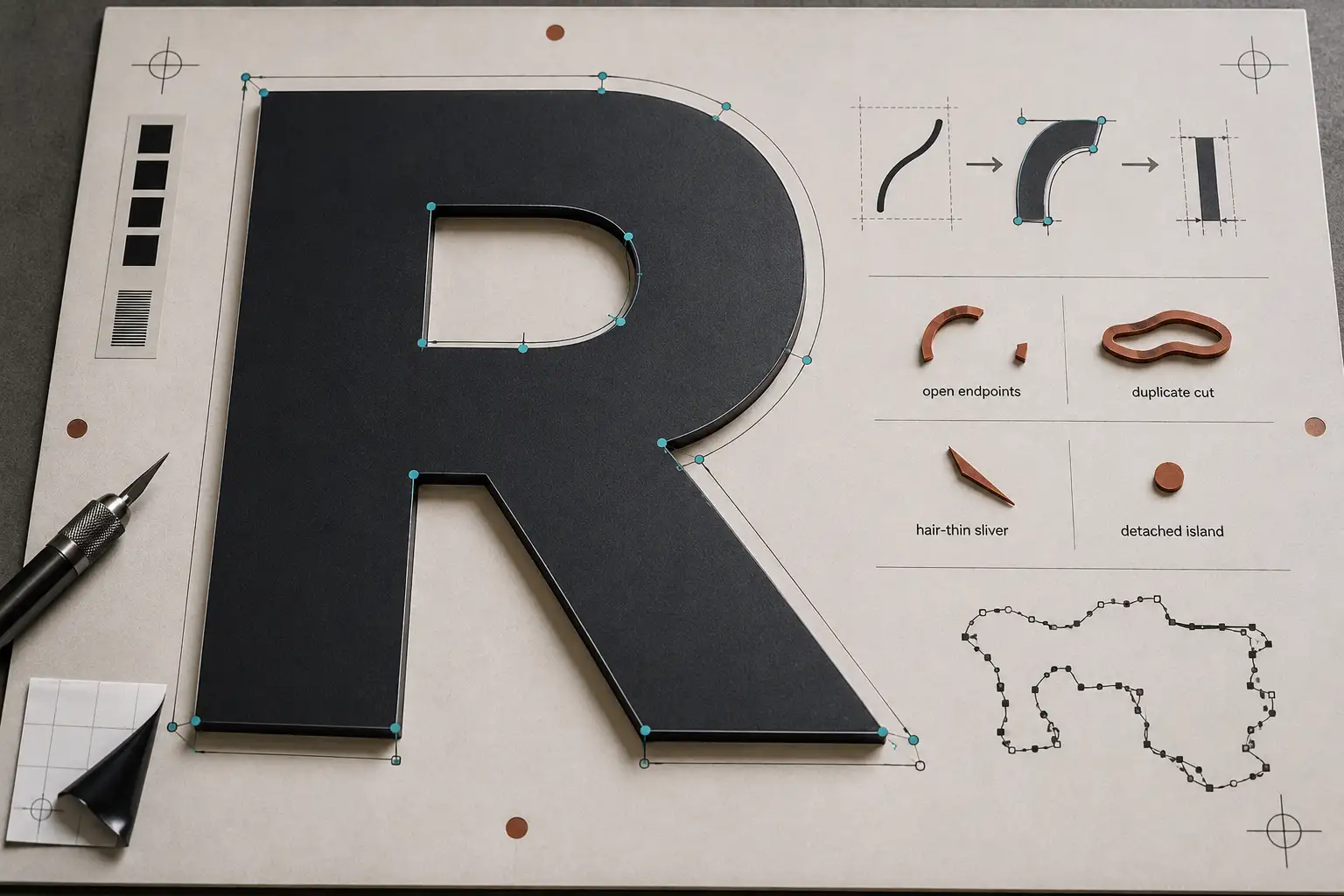
Every cut line is a clean closed vector path. Fewer, well-placed nodes cut smoother and weed easier than a path carrying hundreds of stray points — which is exactly what an auto-tracer produces. No overlapping or duplicate paths, because those double-cut and shred the vinyl along the seam. Clean geometry is the whole game.
Kill the slivers and islands
Hair-thin slivers and tiny detached islands are what tear or lift out during weeding. Where the art allows, thicken fragile strokes and simplify detail that would cut as a fragment. Strokes need to be outlined (converted to filled shapes) so they cut as a shape with width, not as an un-weedable hairline.
Decide counters: separate or bridged
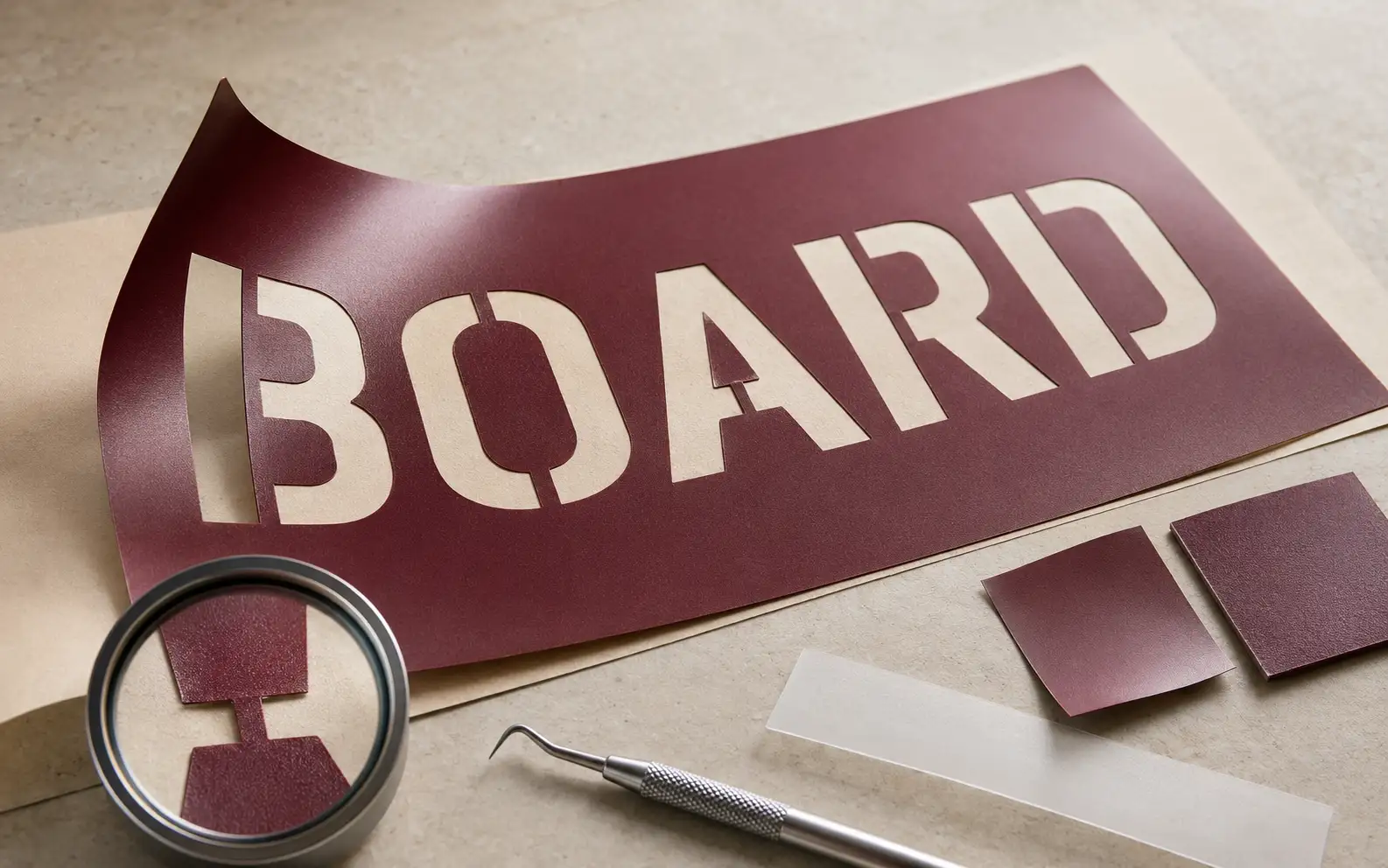
The inside of an A, O, or R gets cut as its own piece. For a solid multi-color decal that is expected. For a one-piece application or a stencil, you may want small bridges tying those counters to the surrounding vinyl so they do not float away during transfer. There is no single right answer — it depends on the material and how the decal is applied, so the paths should be built for the specific job.
Why raster logos can't be cut
A plotter drives its blade from vector paths — it has nothing to follow in a raster JPG or PNG. A customer's raster logo has to be redrawn as clean closed vector before it can be cut at all, and doing that rebuild by hand (not auto-traced) is what produces paths that actually weed. It is the same production-file discipline behind any clean sign job.
Frequently asked questions
What makes a vinyl decal cut path weed-friendly?
Clean closed paths with no tiny islands or hair-thin slivers, minimal node count, and no overlapping or double-cut lines. Weeding is pulling away the excess vinyl by hand; when the paths avoid fragile little pieces and stray cuts, the excess lifts cleanly instead of tearing or leaving bits behind.
How should counters and letter holes be handled for cutting?
The insides of letters like A, O, and R are cut too, so they weed as separate pieces. For a solid decal that is fine; for a stencil or a one-piece application you may want bridges tying the counters to the surround so nothing floats away. Which approach depends on the job — tell us and we build the paths to match.
Do decal cut paths need to be vector?
Yes. A plotter follows vector paths to drive the blade — it cannot cut from a raster JPG or PNG. Every cut line has to be a clean closed vector path. If you only have a raster logo, it needs to be redrawn as vector before it can be cut.
What causes a decal to weed badly?
Usually the file: auto-traced outlines with hundreds of stray nodes, overlapping duplicate paths that double-cut, tiny detached islands, and strokes left un-outlined so they cut as hairlines. Clean, closed, minimal-node paths built for the material are what make a decal weed fast.
Can VectorWiz prep weed-ready decal files?
Yes. We redraw the art as clean closed vector paths, minimize nodes, remove double-cuts, and bridge counters where the job needs it — cut-ready for your plotter. Standard turnaround 24 hours, Rush 12; tell us the material and application.
Naimur Rahman
Leads design direction and quality at VectorWiz. Reviews and redraws production artwork by hand across sign, wrap, screen-print, and CNC work.
Related articles
Drawn by hand. Built for production.
Instant pricing, no commitment. Production-correct vectors in your inbox in 24.