The five worst source files we see.
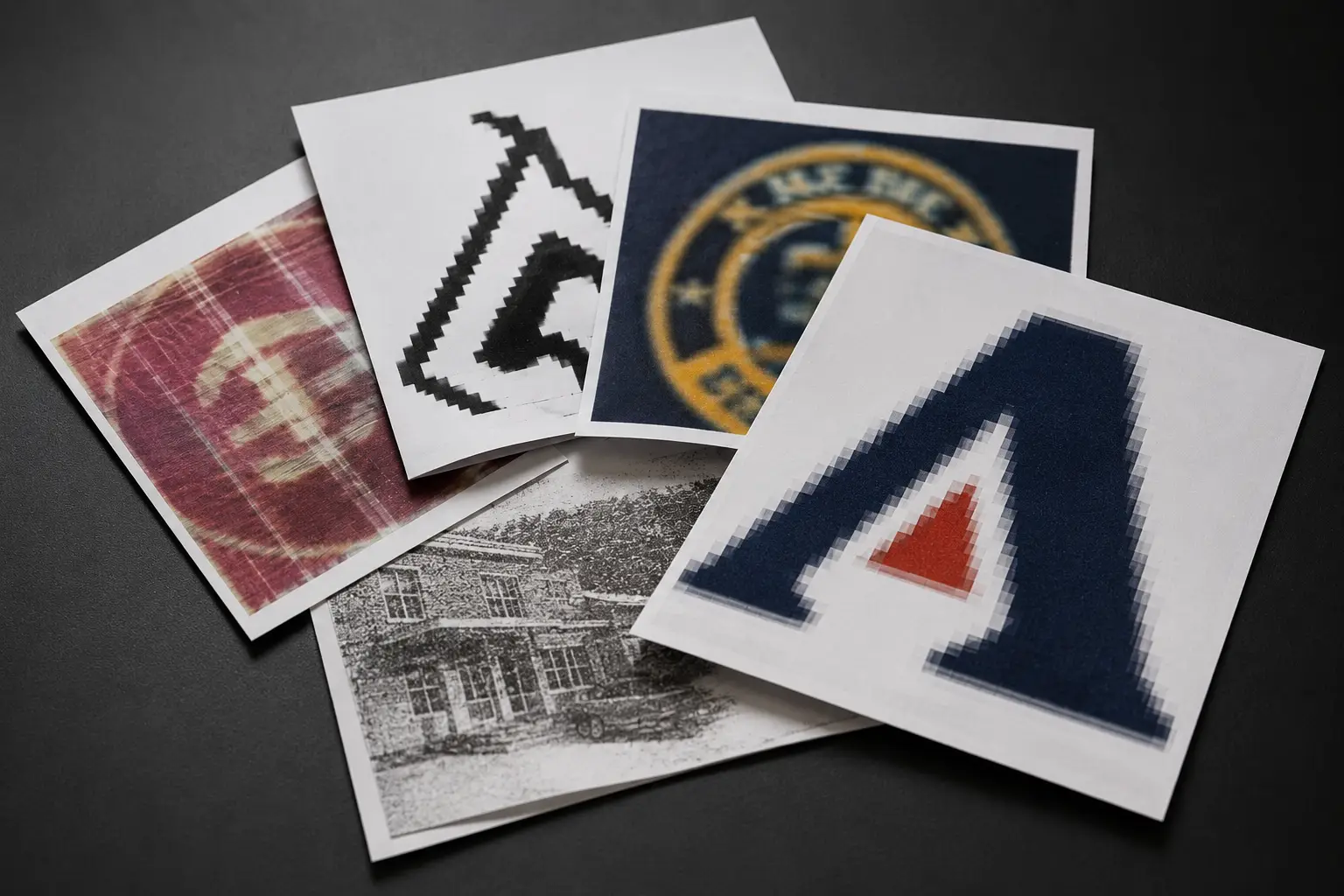
Most jobs that VectorWiz declines are not because the work is too hard. They are because the source file is too far gone — there is not enough information in the pixels to redraw faithfully. Here are the five we see most often, ranked from "we can probably save it" to "we will respectfully decline."

1. Screenshot of a logo on a website
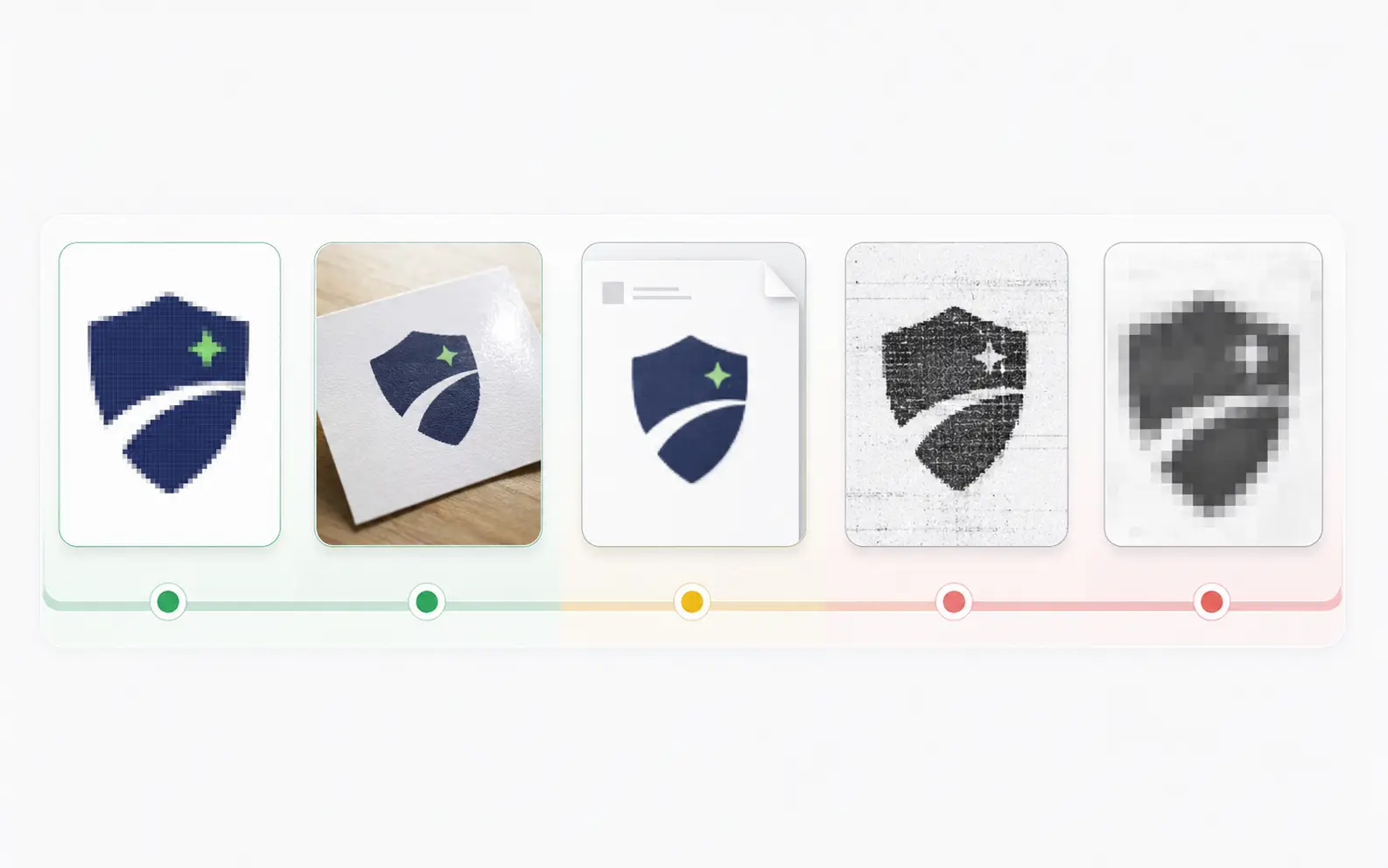
72dpi at small display size. Usually 300-600 pixels on the long edge. Workable for simple wordmarks at Tier 1 pricing — we have a baseline to work from. But complex marks lose detail in the JPEG compression. We will ask if there is a higher-res original.
2. Phone photo of a business card
JPEG compression artifacts, lens distortion, lighting reflections, and a non-uniform background. Recoverable if the design is simple and we can get a square-on shot. Painful if the logo wraps around card edges or has gloss spot-UV that catches the flash.
3. PDF that turns out to be a wrapped raster
Someone exports a logo "as PDF" from Word or PowerPoint, sends it over expecting vector content, and the PDF is actually a JPEG embedded in a PDF wrapper. The file size is small but the content is raster. Tell-tale: zoom to 800% and you see pixels, not paths.
4. Faxed scan, scanned again, emailed
Each transmission step adds noise. Each compression adds artifacts. By the third hop, the letterform edges are fuzz and the colors have shifted. We can sometimes redraw clean lines from the silhouette, but fine detail (serifs, ornaments) is gone forever.
5. 100-pixel JPEG with no original anywhere
The classic. A logo so small that individual letterforms are 8-12 pixels tall. There is no way to tell whether a curve is a curve or an angled line. We decline these — the redraw would be invention, not redrawing.
Send us the file you have. We tell you if it is workable — before you pay.
Upload whatever you have and get an honest read plus an instant price. If we cannot save it, we say so up front.
Need something custom? Email hello@vectorwiz.com
How to avoid sending one
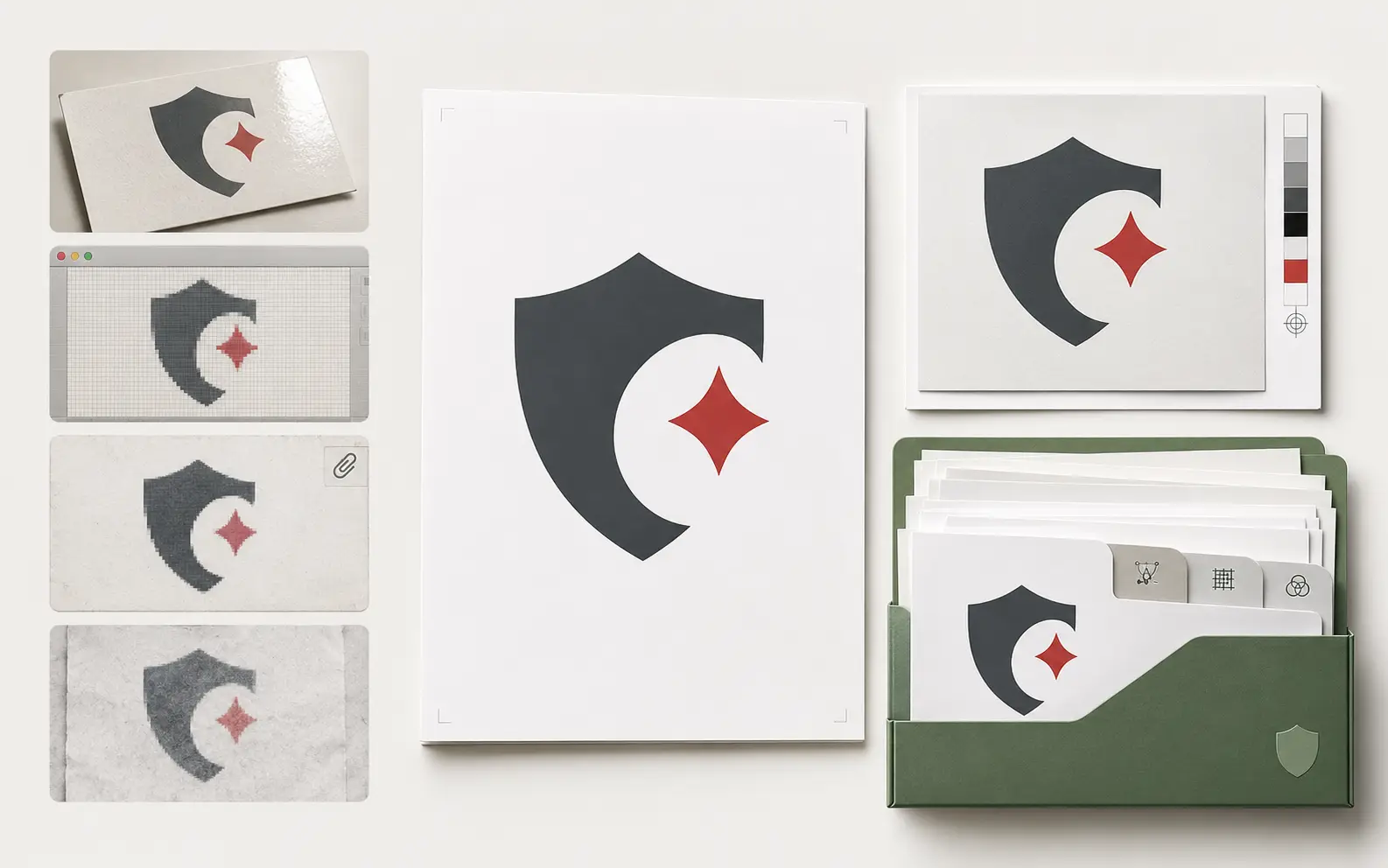
Ask the brand owner for the original source. Usually an AI, EPS, PDF, or high-res PNG from a brand kit. If it does not exist, ask for the highest-resolution scan available — flatbed scan at 600dpi, square-on. Send us what you have →
Frequently asked questions
A customer sent their logo as a JPEG — can you still vectorize it?
Usually yes. A JPEG logo gets rebuilt as clean vector by hand, matching the original. How well it goes depends on the JPEG: a sharp, reasonably sized one redraws cleanly, while a tiny or heavily compressed one loses detail. Send what you have and we give an honest read before you pay.
Can I use a JPEG logo to print signs, shirts, or a wrap?
Not directly. A JPEG is raster — a fixed grid of pixels — so it blurs and stair-steps when scaled up for production. Print jobs need vector art. If all the customer has is a JPEG, it should be redrawn as vector first, not dropped straight onto the sign or shirt.
What should I ask the customer to send instead of a JPEG?
The original vector logo — an AI, EPS, SVG, or PDF, usually held by whoever designed it or listed in their brand guidelines. If no vector exists, ask for the largest, cleanest raster available (a 600dpi flatbed scan, square-on) as the reference for a rebuild.
Is a PNG better than a JPEG for a logo?
Slightly — PNG avoids JPEG's compression artifacts and can carry a transparent background — but it is still raster and still blurs at scale. A clean PNG is an easier rebuild source than a compressed JPEG, but neither is a production-ready vector on its own.
The JPEG is tiny and there's no original anywhere — is it hopeless?
It depends on how small. A logo where letterforms are only 8–12 pixels tall does not contain enough information to redraw faithfully — that becomes invention, and we decline it. Above that, we can usually rebuild from the silhouette. Upload it and we tell you up front.
Tanvir Chowdhury
Runs production operations at VectorWiz. Writes about file briefs, intake, and the production-side details shops learn the hard way.
Related articles
Drawn by hand. Built for production.
Instant pricing, no commitment. Production-correct vectors in your inbox in 24.