Partial vs full vehicle wrap: what changes in the file.
A full wrap covers the vehicle in printed panels edge to edge, so its file is about panel layout, bleed, and carrying graphics across seams. A partial wrap covers only part of the vehicle — spot graphics, lettering, or decals over the factory paint — so its file is about clean contour-cut paths and precise placement. Same delivery formats and full-scale vector; different priorities in how the art is built.

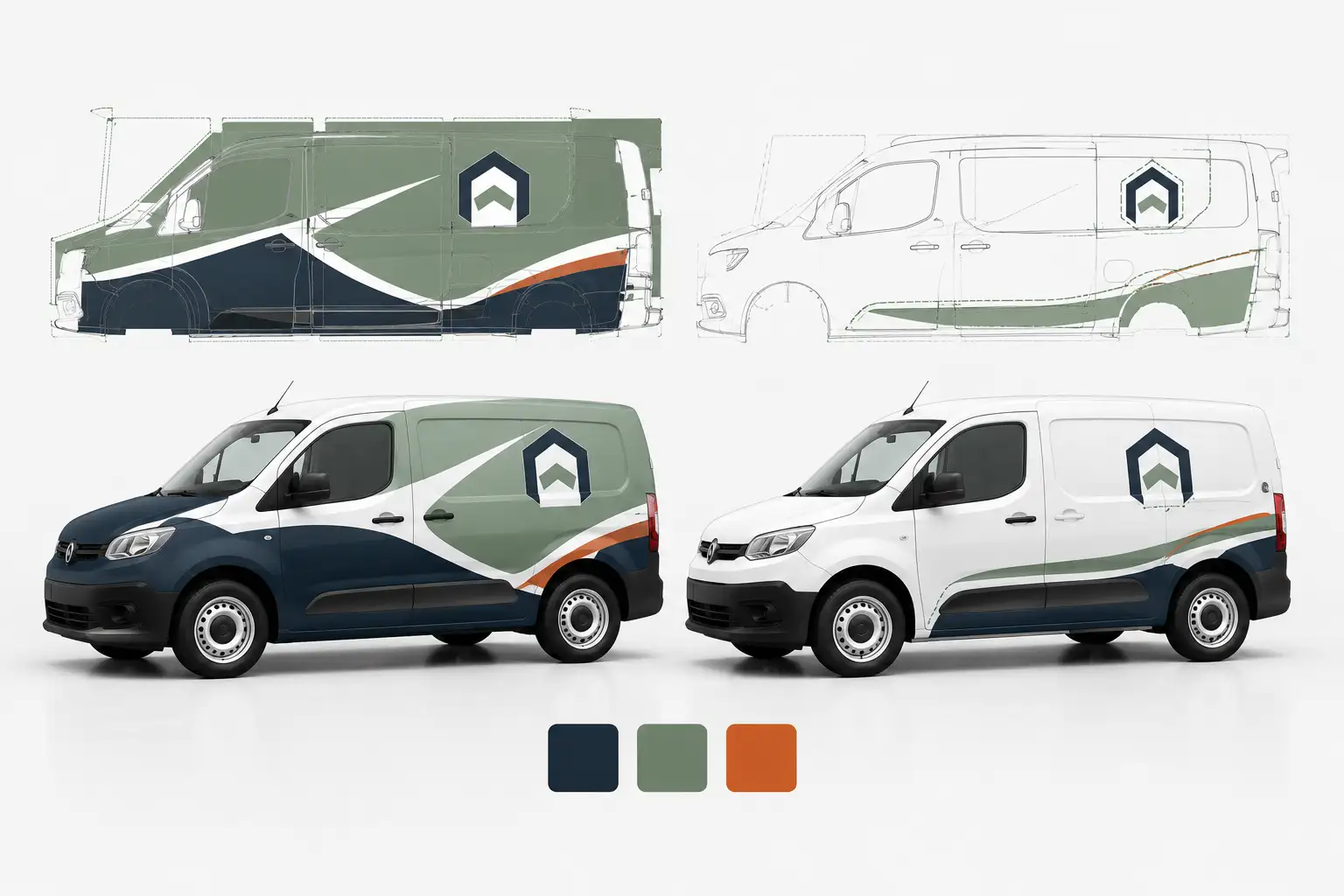
Full wrap or partial, the delivery is the same — layered, full-scale vector your RIP can print. What changes is where the file work goes. A full wrap lives on its panels; a partial lives on its edges. Knowing which you are building tells you what to get right.
Partial or full — send the job and get RIP-ready art back.
Full-panel layouts or precise contour-cut graphics, layered and spot-matched. Production-correct in 24 hours.
Need something custom? Email hello@vectorwiz.com
Full wrap: panels, bleed, and seams
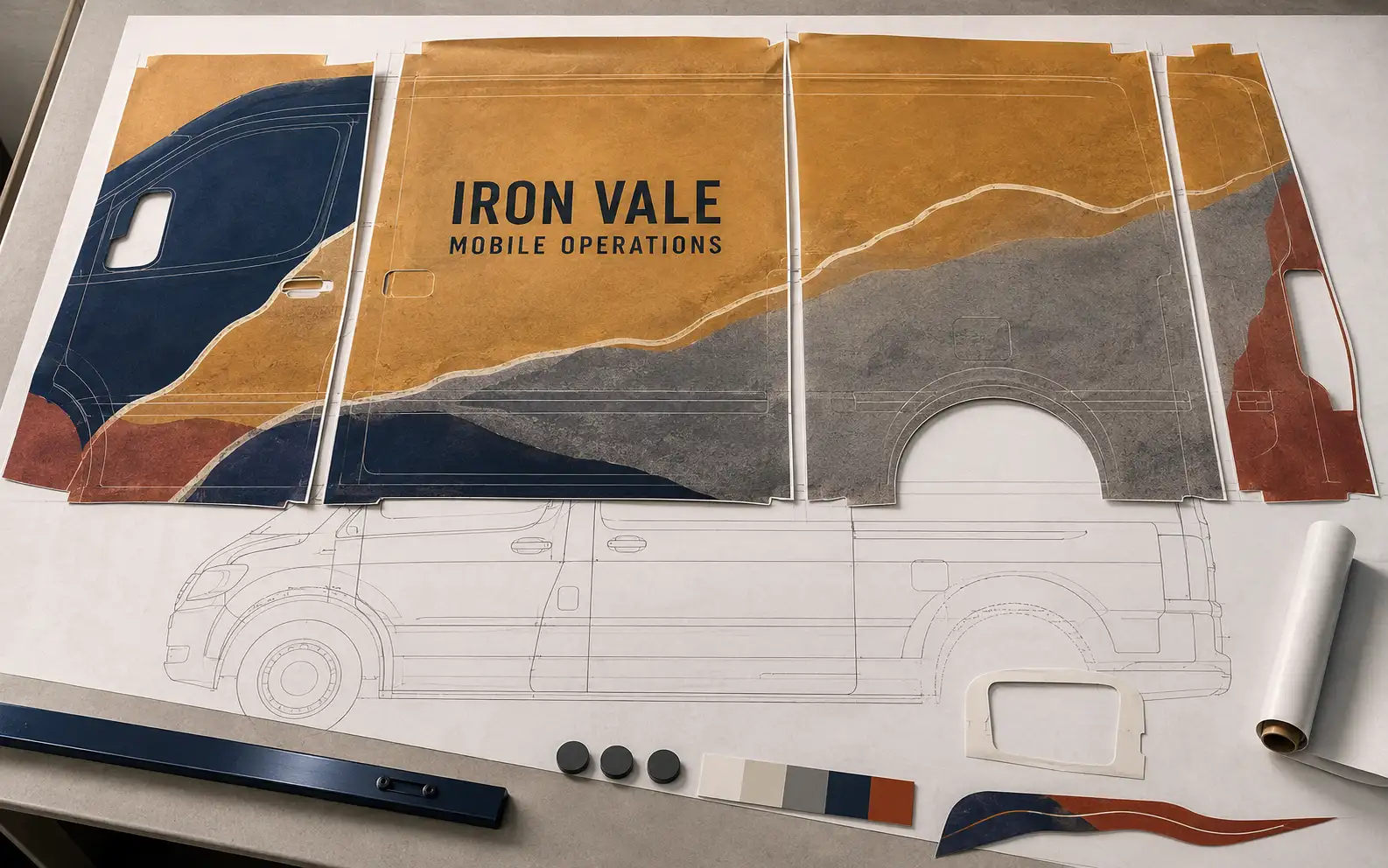
A full wrap covers the vehicle in printed vinyl edge to edge. The file is built into the vehicle template as panels, with bleed past every trim line and graphics carried continuously across each seam so nothing breaks where panels meet. The whole surface is printed, so color coverage, panel alignment, and seam continuity are the things that make or break the install.
Partial wrap: cut graphics over paint
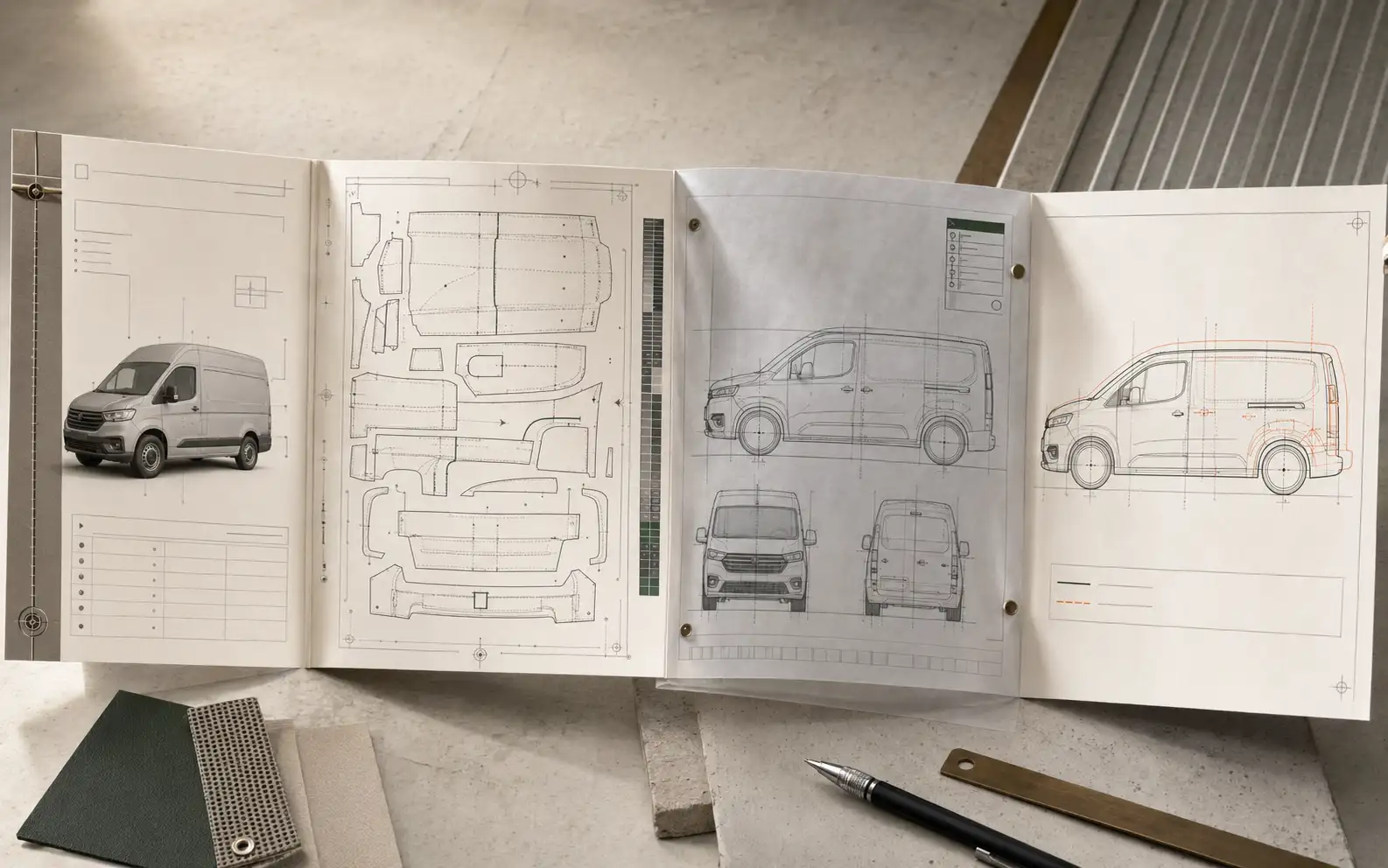
A partial covers only part of the vehicle — a side graphic, a tailgate logo, lettering, a stripe package — applied over the factory paint. Because the graphic sits on visible paint, it is defined by its edges. The file work concentrates on clean contour-cut paths on a named cut layer with registration marks, and on placement, so the applied piece reads as a deliberate, sharp shape rather than a floating sticker.
| Aspect | Full wrap | Partial wrap |
|---|---|---|
| Coverage | Printed panels, edge to edge | Spot graphics over factory paint |
| Bleed | Full-panel bleed + seam overlap | Small bleed past each cut line |
| Cut paths | Mostly panel edges | Every graphic edge — contour-cut heavy |
| Main risk | Seam/panel misalignment | Ragged or off-register cut edges |
| Color | Full coverage, spot-matched | Match graphics to brand + paint |
Where they overlap
Plenty of jobs are both — a printed side panel with cut lettering over a painted hood. The file just carries both setups: panels with bleed where it is printed, contour-cut layers where it is cut. Start from the wrap art guidelines for the shared fundamentals, then treat the printed and cut areas by their own rules.
Frequently asked questions
What's the difference between a partial and a full vehicle wrap?
A full wrap covers the vehicle in printed panels edge to edge; a partial covers only part of it — often spot graphics, lettering, or decals applied over the factory paint. The file work differs: full wraps are about panel layout, bleed, and seams; partials are about clean contour-cut paths and placement over painted areas.
Does a partial wrap need bleed like a full wrap?
Printed pieces still bleed past their cut line so a registration drift never shows a white edge, but a partial has far less full-panel bleed than a full wrap. The bigger concern on a partial is accurate contour-cut paths so the applied graphic reads as a clean, intentional shape against the paint.
Are contour cut paths more important on a partial wrap?
Usually yes. A partial is defined by its edges — the graphic sits on visible paint, so every cut line is on show. Those paths need to be clean closed vectors on a named cut layer with registration marks, so the print-and-cut workflow trims exactly to the intended shape.
Which is cheaper to prep, partial or full?
It depends on the art, not the coverage. A simple partial with a few cut graphics can be quicker than a complex full wrap; a partial with intricate contour cuts and spot colors can be just as involved. We grade every job on the actual artwork, so you see the price before you commit.
Can VectorWiz prep both partial and full wrap files?
Yes. Full wraps come as full-scale panels with bleed and seam overlap; partials come with clean contour-cut layers and placement set for the painted areas. Either way it is layered, RIP-ready vector — standard turnaround 24 hours, Rush 12.
Naimur Rahman
Leads design direction and quality at VectorWiz. Reviews and redraws production artwork by hand across sign, wrap, screen-print, and CNC work.
Related articles
Drawn by hand. Built for production.
Instant pricing, no commitment. Production-correct wrap art in your inbox in 24.